Monday, April 18, 2016

Review of "South Africa, Lesotho & Swaziland", Lonely Planet Series

Trying to understand South African history is like looking through a kaleidoscope.  Every author, every museum, every movie has an angle or a lens that they tell a story through.  This is true all over the world, but I've been surprised that I can't find even a museum presentation that attempts to give me a big picture.  Perhaps this is because the country is in a transition – they are re-imagining history and story-telling, for good reason, and so you get shards to put together like a Gaudi with his mosaic art.  
The National SA Museum, for example, has a big sign at the front of their main exhibit about how they had to take down most of the exhibit when apartheid was abolished because the “Africa bushman” dioramas are racist.  The Voortrekker Museum in Pietermaritzburg, which I was counting on to piece together the fragments I'd gathered from Boer War memorials about the Afrikaner story in the middle part of the country, had beautiful detail about oxcarts and how the French crown prince died here in battle and the Hindi influences on community building, but it felt obvious that “larger picture” exhibits had been pulled and not replaced or summarized.  

There are great exhibits put together at the Jewish Museum, the Slave Lodge, the District Six museum on Coloured (read Indo-Asian) displacement, our own Lwandle Migrant Labour Museum, and several others we've seen in the last couple weeks.  But you have to connect the dots yourself – I carry the timelines around in my head – for example, Judiasm wasn't allowed by the Dutch, thus the first synagogues came with the British; the British were not very interested in the area until the end of the 18th century – hmnn, were they preoccupied with another colony till then?  I feel like a detective sometimes, in a very well-researched area.  Do those living here know the other stories?  Realize how it affects their stories?  What stories do we not know in our own American history?  I was shocked to learn about the Japanese internment camps in the US during WWII, long after I received a political science degree.  

Anyway, this is supposed to be a book review, so I'll get off my preaching stool and tell you about this peculiar book choice: 
South Africa, Lesotho & Swaziland, Lonely Planet Series, by Jon Murray, Jeff Williams, Richard Everist,  3rd ed, 1998. 

I am hardly an expert on travel guides, and I don't mean to say that Lonely Planet is the best series – but allow me to point this book (or other editions of it) out to you.  I read a lot about where I travel, and I've read what I can get my hands on about South Africa, and this book caught my attention, in that it answered questions that I've asked, but couldn't find answers to.  It also gives history in reasonable bits throughout the book, by town and district. (FYI - This book did beat out the other two guidebooks in our car, Footprints and DK Eyewitness Travel – my poor family surely got tired of my daily narrations of the countryside...)

Q:  Why was the British relationship with the Afrikaners (read: Boers) so confusing?  

A:  Because the Brits were confused!   
“However, because of changing policies their [British] armies and officials often had no idea of whether they should be restraining Boers, protecting blacks, enforcing British treaties, revenging Boer losses or carving out new British colonies. Nobody knew what orders would arrive on the next mail boat from England.”  Pg 23
(If this snippet intrigues you, there is a lot more in interesting anecdotes you can read about.)
I also had heard of The Difaqane, seen panels that talk about this mass migration and conflict between South African tribes, and wondered at how that ties into the larger picture.  This book explains most clearly how it was “a time of immense upheaval” as Zulu warriors successfully conquered neighbouring tribes including total war and forced migrations for survivors.  This book is the first place I saw that connects this African-on-African violence to the Great Trek of the Afrikaner farmers leaving the now British-run Cape. 

Q:  How can black Africans claim their lands were stolen while the white Afrikaners simultaneously swear the lands were empty?

A: “The Boers, whose Great Trek coincided with the difaqane, mistakenly believed that what they found – deserted pasture lands, disorganised bands of refugees and tales of brutality – was the normal state of affairs. The Afrikaner myths, now dying hard, that the Great Trek was into unoccupied territory or that the blacks and the Boers both arrived at much the same time, stem from this. The difaqane also added emphasis to their belief that European occupation meant the coming of civilisation to a savage land.” Pg 20
Sure, I had guessed at something like that answer already, but without the logic, you still wonder in the back of your mind.  


You see other big picture things, too, like how the British predictably make some conquest decisions to “keep it from the French,” and that they liked to solve territorial problems between others by simply annexing the disputed area.  And there is still a lot more to understand.  


Sunday, March 20, 2016

Road Trip

Dear friends and family,

We leave Friday for an 18 day road trip to visit partners around the country, and we wanted to get a note out to you before we leave. The boys end their term and are released early Friday morning for a two week break. We're taking this chance to drive north (of course, I know) to visit Grace Community Church in Cradock this weekend—they have a pastors' seminar on Saturday where we can meet everyone, and then we'll be at one of the churches Sunday and visit the local community. Then we're on to Mthatha to have a day or two with the head of Bethany Bible College. Both of these communities had MMN workers in the past, and we are all interested in continuing the relationship, listening to their current situation and learning how we might be able to help with future capacity building.

We then keep heading north to Pietermaritzburg to stay with the other MMN family in South Africa, the Sudermans, whom we stayed with in August. We will also meet the two new Mennonite Central Committee couples that have moved there (that reminds me to bring our hymnal for some yummy four-part singing) and learn about what the Mennonites are organizing and getting involved in—one couple fills the new Peace Coordinator position. It should be nice to spend some time with these folks, find some support for our work with Oscar, have time in the Peace library, and re-acquaint ourselves with the Anabaptist network based there. We'll stay through Easter, and then go around the mountain to the neighboring country of Lesotho to visit my cousin! She and her family live in the capital Maseru; her husband is a pilot with MAF and I haven't seen her in years. Both the Suderman and Derksen-Borror families with whom we're staying have kids, albeit younger. That will be a nice energy to be around, and more importantly I think we will all enjoy some contact with North Americans for a change. And this last place has Great Dane puppies to play with—how we have missed our pets…

So the last couple weeks has seen us continuing to get established (something might actually make it into our bank account yet!) and learning and meeting people. It is also the start of the grants and funding season, and we have started helping Oscar with a stack of calls for proposals. Grant writing is much more sophisticated here than Chad or Uganda, and we are doing our best to keep up. I've decided that writing for grants is a pernicious mix of heady, theoretical university paper-writing and the self-promoting canned stuff of job applications. And maybe I'm just ready for a change of scenery—but Oscar has let us know that he is ready for us to be shouldering tasks once we are returned in April.

The boys have not found school too challenging yet to have been stressed with exams (we'll see how the term results are) and they are curious what this road trip will be like. We're happy to show them more of this country, as this little corner is just that. Jacob was inspired by seeing online videos of his Irish dance school doing their annual St. Pat's presentations, and so he volunteered to do a short demonstration at the all-school assembly on Friday. We're pleased to see him put on his dance shoes again after these three months, but he also went to bed sad after practicing, so hard times do still come as well as go.
The big accomplishment this week is that we are completely off our US phone plan—we all have South African phone numbers now. We don't expect you to call us, but we can connect with you for free using What's App if you have a cell phone. Or let us know if you have a different favorite way of connecting. Facebook Messenger has worked for video calling, and we have Skype, too.

I know some of you have mailed things—it takes a while for things to reach us, and it's been suggested that we have the tracking number of packages to see if they get stuck somewhere. Time to do our last errands for the trip, get the proposal off, clean out the fridge, and say goodbye to our sunny beach—it will be fall by the time we get back.
Our love to you, and thanks for your prayers for travel mercies: that's for the car, for our cultural learning and connections, for happy spirits in the closed confines of the car, health and rest on the way. And we love to hear your news! E-mail what is going on with you—we love to read!

Kathryn, for Dan and the boys, too


Saturday, March 19, 2016

Review of “Invictus” movie (PG13 - 2009):

Want a beautiful picture of reconciliation, based on a true story?  Want to understand Mandela’s unique vision for transformation?   Want a great sport movie, directed by Clint Eastwood, with Morgan Freeman and Matt Damon?  This is it!

Wednesday, March 9, 2016

First Month in South Africa


It’s been a long, lovely month of finding our feet in our new place. Finally having a phone line and internet at home is a big relief, and we have learned how to get around, do our shopping, and get Oscar to slow down just a little bit. We were surprisingly tired, although reflecting on how pressed we were in our last couple months in the States, you probably anticipated our need to “just be” a little bit.  I’ve had neck tension and inflammation, and rest and regular visits to an osteopath has managed it, as well as trying some acupuncture again.  John-Clair missed a day of school last week for a stomach bug going around school, Jacob had a bad jelly-fish sting, and Dan twisted his foot, and now we’ve all taken short turns with the flu, so we’ve all had some reasons to take it easy.

But we’ve been settling into our new reality—how far away you all are, the noise of the ocean and the strangeness of the languages around us, the immense complexity of the context of South Africa, the uniqueness of this place.  As Jacob reflected the other day on our way to school, driving past a neighboring township, “It’s kind of weird to live in Africa but in a place where they are used to seeing white people.” I asked if that felt like a good or bad thing, and his response summed it up for all of us: “Both.”


Understanding South Africa


As some of you have seen from our Facebook pictures, Oscar is taking us around to meet and talk with local government leaders, school staff, and pastor’s forums. He’s enjoying orienting us – directing us to cultural learning such as Robben Island and local museums. Oscar has also given us several good books to read as part of our orientation to our work, including A History of Inequality in South Africa, 1652-2002 by Sampie Terreblanche. (We will put reviews of all the good resources we come across on our blog, which will be made public soon.)  I get bogged down in economic discussions, of which we hear many, with talk about the devalued rand and “the black economy vs the white economy.”  Terreblanche, among many others, says that while democratic rights are much improved, systemic change has not happened, government promises are unkept, etc. With a particularly approachable government councilor, I asked the question I’ve heard bantered back and forth for a long time, “Are people really better off now – is your average black South African really better off than he was twenty years ago?” “Oh yes,” he smiled at me, “we are living freely now. We can live with our families, we are united and can go where we want and everything is better.” I was embarrassed by my question, and still not understanding; then we visited the Labor Museum.
Entrance to the museum

Lwandle Migrant Labour Museum


“The apartheid dream required the geographical separation of the races” says one plaque. But whites needed the labor of non-whites – what to do? This museum is full of documentation and pictures of the tragic situation that developed: workers that lived in their designated home territories sometimes had to travel as much as 8 hours a day to get to a job, leaving family at 3am to arrive home at 11pm at night, in some instances. Many others opted to move to a hostel, or “bedhold,” and leave their families for 11 months out of the year. Families were not allowed in hostels, and in fact, if you were caught in the hostel neighborhood without a pass, you paid a fine or served prison time. Hostels were strictly guarded with one road in, much like the forced labor camps they developed from. In Strand today, where Lwandle is located, we drive circuitous routes on the limited thru streets to get around.

There is much more we learned about – women that smuggled themselves into the hostels to be with their husbands to start families, the lack of food and sanitation, and always, at the end of the day, the constant heritage of this unjust system of exploitation and brokenness. Two hostels were built in the larger Cape Town area. Lwandle hostel was built in 1960 to house 500 men – by 1990, two thousand men, women and children were squeezed into these curtained rooms with bunkbeds. Sometimes sixteen lived in the space for four men the size of a prison cell, the women and children hiding in the cupboard when the guard came around. One woman explained why she took such a risk:

I came here to have children because my husband did not have enough time to be at home. He would take leave for only four weeks. We were not able to sit. We did not know each other because we married at a young age. We wanted to know each other very well. In fact, he wanted me to be close to him.
You can see how blocks are laid out, with very little vegetation, and the remaining frames on the roofs for solar water heaters
Inside the block, looking at the cabinets the women had to hide in
How 16 people fit into a room with two bunk beds
Then, as our guide was explaining that by 1991 there was a push to start a school for the children, I slowly begin to get it. I read on – 500 children living in Lwandle, and the government refusing to provide a school because they cannot acknowledge that those children are there. I realize that as we have toured the schools for mainly black and colored neighborhoods, signs over the doorways read things like “established in 2006.” My blood runs cold as I realize there were no schools for black South Africans in this entire area until recently, and in fact, no houses, or families living together, or churches, or shops, or beaches they could go to…
Beach sign
Nathan and Kathryn listening to our guide
I have imagined the end of apartheid as like the end of segregation in the US – and obviously, there are similarities. But I’m finding that much is different, yet even in its different-ness it has a lot to say to the US story. I will be sharing that with you, as much as you want to read of it, and we love to hear back from you your own thoughts on our common stories of injustice, racism and systemic brokenness.

To finish the Lwandle story – with the end of apartheid, people didn’t need passes to be wherever they wanted and discrimination laws ended.  Government built schools for the children, families were allowed to live together, and to buy homes in the area (although speculation by whites and lack of resources for blacks made this, what should have been an equalizer, like starting the race several laps behind - Oscar’s words.) Families continued to live in the hostels, but openly, and now they could spread out, live outside of it, open small businesses; and so the various townships developed in the area – low-income housing, with informal housing (read: shacks) that more recent immigrants have put up alongside.  And back to 1991 – the museum noted that the need for a school did not go unheard – a Dutch Reformed Church let their buildings be used for an informal school, supported by the Inner Church Group of Somerset West, the white neighboring suburb. So while I had to leave the museum now even more embarrassed by all that I had seen and heard, I could also be hopeful.  Working with Oscar, who has given himself to the work of holistic transformation, gives us even more hope for a changed future.
Small businesses like these are now allowed in the township

Review of: Desmond Tutu in No Future without Forgiveness, 2000

I recommend this book to understand more about this amazing yet humble religious leader, and to begin to understand what a complicated process he helped lead in the Truth and Reconciliation Commission.  It is an accessible, easy read, even considering the gravity of the subject matter.


Excerpt:
“God does not give up on anyone, for God loved us from all eternity, God loves us now and God will always love us, all of us good and bad, forever and ever. His love will not let us go, for God’s love for us, all of us, good and bad, is unchanging and is unchangeable. Someone has said there is nothing I can do to make God love me more, for God loves me perfectly already. And wonderfully, there is nothing I can do to make God love me less. God loves me as I am to help me become all that I have it in me to become, and when I realize the deep love God has for me, I will strive for love’s sake to do what pleases my Lover. Those who think this opens the door for moral laxity have obviously never been in love, for love is much more demanding than law. An exhausted mother, ready to drop dead into bed, will think nothing of sitting the whole night through by the bed of her sick child.

As I listened in the TRC to the stories of perpetrators of human rights violations, I realized how each of us has this capacity for the most awful evil - every one of us. None of us could predict that if we had been subjected to the same influences, the same conditioning, we would not have turned out like these perpetrators. This is not to condone or excuse what they did. It is to be filled more and more with the compassion of God, looking on and weeping that one of His beloved had come to such a sad pass. We have to say to ourselves with deep feeling, not with a cheap pietism, “There but for the grace of God go I.”  pg. 85-86

Tuesday, January 19, 2016

First week in South Africa

The boys started school on Wednesday, dressed in their blue and white school uniforms.  They were warmly greeted – Jacob is starting grade 7 again, John-Clair is grade 9 and both are in classes of ten students. It’s fun to be the only Americans on campus, and to start the new year with enthusiasm, but we will see how the long haul settles in. Jacob left today (Monday) for a class camping trip with the upper primary grades. He doesn’t sleep well away from home, so is not exactly looking forward to it, but we hope it will help him bond with his small class. They have both sat in their Afrikaans class, but it will probably turn into study periods for them because of how far along the other students are.  Jacob starts German, John-Clair has started Spanish. They both need to do some catch-up with classmates, but the language classes are even smaller, so they are getting good guidance. John-Clair’s English teacher commented that he might not be challenged in her class, and that’s the point I realized that while this is a Cambridge curriculum, several (many?) of his classmates do not speak English as a mother tongue. She will assess if he can be moved up.   

In the boys’ words

We asked after the first day to recall an embarrassing moment at school. John-Clair relayed being asked a question in Spanish class to which the answer was yes, and he stumbled through all his languages first saying “Ah oui, I mean yes, hiki, ah, SI!” and was very embarrassed. (He told a similar story two years ago – getting on the school bus for the first time, being greeted by the bus driver and replying to her sunny “Good morning” with “Bonjour!” and turning beet red.) Jacob said he sat next to a talkative boy and the hardest thing was the boy whispering him a joke while the teacher was busy, and Jacob couldn’t quite follow when it was supposed to be funny, or even when it ended, since it kept going, and so he just kept laughing. Both boys are missing friends from Seattle, and Jacob is really struggling since his phone has been missing since last week. 

Reinventing ourselves

Speaking of phones, we feel like we have spent the week reinventing ourselves - like when you find you need i.d. to get i.d. – we needed a car, to order school books online, get insurance, set-up an office supply budget, start a bank account, etc.  But you need phone/internet to really make those things happen and every day presented new challenges to this, and we felt like we were really chasing our tails a couple times. (Couldn’t buy the car because couldn’t transfer money because couldn’t contact Seattle bank because couldn’t get the phone hotspot to work because couldn’t buy the data plan, etc.) So while the place is absolutely beautiful, we are having flashbacks to other African experiences. I hear other South Africans complaining about the bureaucracy of the country – just noticed that to get our library card we need two outside references – but then this is the first African town we have lived in that has a public library! But we have a car now (still no internet at home yet, so writing this offline, but not complaining) and it’s a great deal. A used VW Golf (that’s like a Jetta here) stationwagon, in great shape and low mileage. Oscar had been bussing both his family and ours around this first week, so this has been a great relief to all. It’s also fun to relearn driving stick-shift with the left hand, and keeping to the wrong, I mean left, side of the road. 

Working with Oscar

Oscar, and wife Zandi, have been wonderful orienting us, driving us around, patiently helping us shop and choose a car, sharing some meals, and giving us a little time to get settled. We had an orientation to SADRA (Southern Africa Development and Reconstruction Agency) on Friday, and have begun planning for the year, and the next several months. The next election is in June, and there is a lot to do to prepare for that in hopes of diffusing violence that can often happen in the lead-up to contentious elections, which this is sure to be. SADRA is making a point of working in fragile democracies, and working at building civil society at any entry point. Oscar also has an intern this month from St. Olaf, a Mennonite young man who had growing up years in South Africa and is now helping with some peace education curriculum. This week we will observe some follow-up trainings for school peer mediators he will conduct while piloting the new material, and then look at some curriculum we’re calling “Rethinking Diversity.” Racial tensions continue to increase in the schools, and we want to look at the specific issue of violence against immigrants in our trainings and not just conflict management. As Oscar puts it, Trump makes his anti-immigrant statements on a national stage – loud and hurtful but relatively benign in policy; local leaders here who control social services and police responses to xenophobia are spouting the same rhetoric and more directly affecting the day to day life in the here and now for immigrants and refugees. Here is where we need transformation.

We are learning a lot, and have spent a lot of time over the last four days sharing stories with Oscar of experiences across Africa. What I knew was a complicated social structure here is even more complicated, with a longer history than the U.S. We have a work plan for the week, ending with a family trip to Robben Island on Saturday. The boys start extracurricular activities next week – tennis and a by-audition choir, and Jacob wants to start martial arts. The gamba survived the trip to Capetown well, and we just bought John-Clair a used guitar yesterday. So we will have music in our house again, and are working on internet and then setting up a home office. We are adjusting to temperatures of 80-100 degrees each day, but the ocean winds quickly cool off the house every night, so we are hardly uncomfortable.  Fresh food is abundant, and we have been healthy, so things are going well, and we are excited to start work.

Thanks for your continued prayers and kind thoughts,
Kathryn, Dan and the boys 


Friday, July 24, 2015

Letter from Ministry Support Team


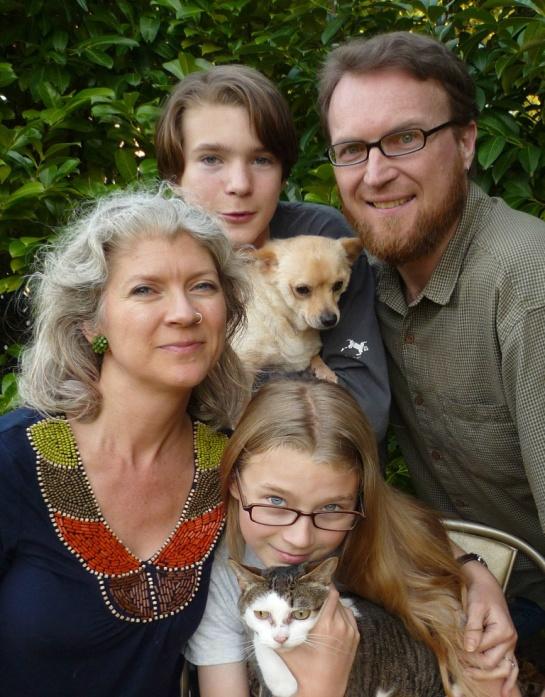
Smith+Derksen+family+portrait+-+April+2015.jpg

Return to Africa: a need and a call to serve
We invite you to help Dan and Kathryn Smith Derksen answer the call to share their training and experience in South Africa, engaging in the critically needed ministry of peacemaking and reconciliation.

Why South Africa?
Even amidst the possibilities offered by multiracial democracy, post-apartheid South Africa continues to deal with the consequences of racial oppression. Growing disparity of wealth and tensions related to increasing immigrant populations require models of power-sharing, respect and forgiveness. While the need is large, supporting local conflict transformation initiatives will make a real difference.    
  
To this end, Mennonite Mission Network is excited to have the Smith Derksens from Evergreen Mennonite Church (Kirkland, Washington) and Northminster Presbyterian Church (Seattle, Washington) answer the call for personnel support from the Southern African Development and Reconstruction Agency (SADRA) in Cape Town, South Africa. This is a partnership ministry assisting Pastor Oscar Siwali with teaching peacemaking skills in schools to reduce gang violence and empowering local church and community leaders through capacity-building workshops and advocacy. They will also support other long-time Mission Network partners, such as Bethany Bible School in its teaching ministry among African-Initiated Churches, and Grace Community Church with its boundary-crossing ministries of reconciliation.

Why Dan and Kathryn?
Having been born in Africa and raised in peacemaking traditions, Dan (Church of the Brethren) and Kathryn (Mennonite) both feel strongly called to this work. They’ve already completed six years in similar service—three years each in Uganda and Chad—documenting human rights in a war zone, researching and publishing advocacy materials on the Amnesty Law, and providing administrative support to ecumenical leaders in Muslim/Christian dialogue. The immediate need in South Africa calls them to this exciting ministry!

How you can help  
We need people who will partner with Dan and Kathryn, through prayer and financial support. This ministry of furthering God’s reconciling love among the people of South Africa is expected to cost $114,000 per year for three years. On behalf of the Smith Derksens, we are seeking commitments of support totaling $80,000 each year from friends, families and congregational connections. All support is deeply appreciated!

If you feel called to support Dan and Kathryn in this ministry, please complete and return the enclosed Partnership Intention card. Alternatively, automatic monthly and one-time electronic giving are available through the Mennonite Mission Network at Mission Network Online Giving.

With gratitude,
The Ministry Support Team:
Paul Brown, Evergreen Mennonite Liz Tennant, Northminster Presbyterian
Annette Hein, Evergreen Mennonite Rodney Schmidt, Northminster Presbyterian
Karina Derksen-Schrock, Evergreen Mennonite Lanny Shuman, University Christian